
Stamped & Decorative Concrete
Get the upscale look of natural stone, brick, or tile at a fraction of the cost.
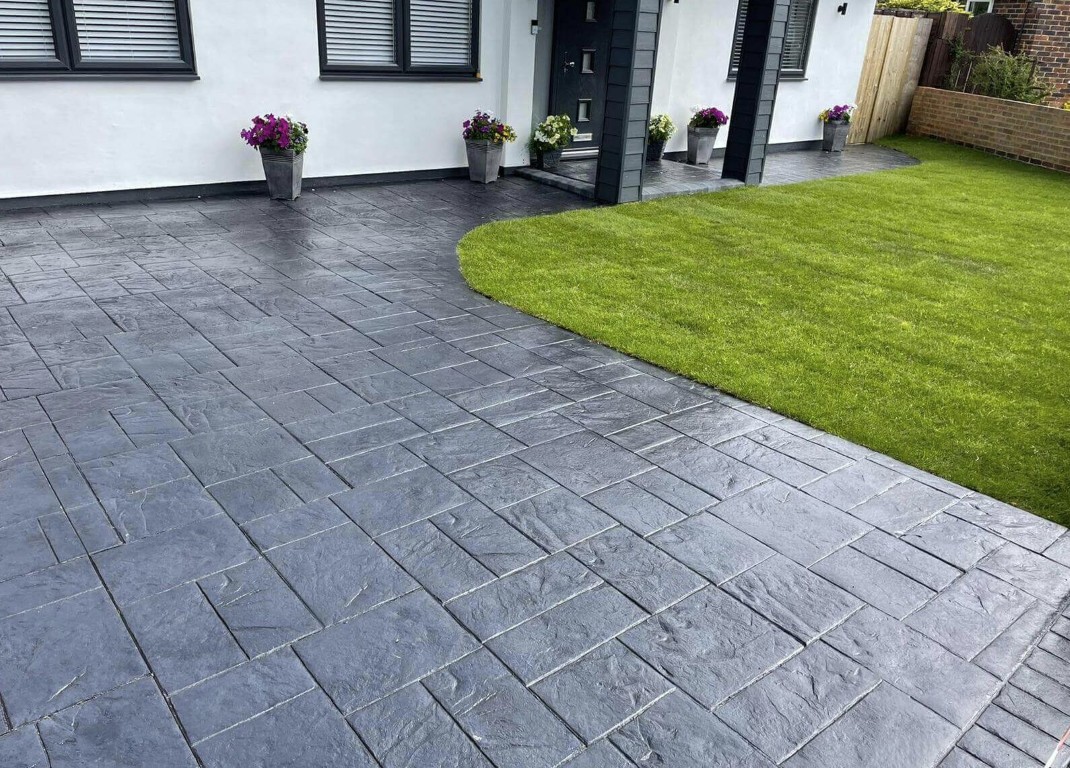
What is Stamped Concrete
Stamped concrete uses special mats and tools to create textures and patterns that mimic other materials. We pour regular concrete, then press textured stamps into the surface before it hardens. The stamps create realistic impressions of stone, slate, brick, cobblestone, wood planks, or tile. Combined with color treatments, the result looks remarkably like the real material.
This technique gives you high-end aesthetics without the high-end price tag. Natural flagstone costs $15 to $30 per square foot installed. Quality pavers run $10 to $25 per square foot. Stamped concrete delivers a similar look for $8 to $18 per square foot, and it performs better over time because it does not have the maintenance issues of individual stones or pavers.
Beyond cost savings, stamped concrete offers practical advantages. It creates a continuous surface with no gaps for weeds to grow through. It stays level instead of shifting like pavers do. It handles freeze-thaw cycles better than natural stone. You get beauty and durability in one package. Many of our customers choose stamped concrete for patio projects where they want an upscale appearance without the maintenance headaches of natural materials.
Popular Stamped Patterns and Colors
The variety of available patterns and colors means you can create almost any look you want. Here are the most popular options we install for customers in Thousand Oaks.
Stone and Slate Patterns
These patterns replicate the irregular shapes and textures of natural stone. Ashlar slate mimics cut stone with rectangular pieces in varying sizes. Random stone creates a more organic look with irregular shapes fitted together. Both work well for patios, walkways, and pool decks. We can add multiple colors to create realistic stone variegation and depth.
Brick and Cobblestone
Brick patterns range from traditional running bond to herringbone and basketweave designs. Cobblestone stamps create the look of old European streets with rounded stones and mortar joints. These patterns work particularly well for driveways and entryways where you want a classic, timeless appearance.
- Wood plank patterns for rustic outdoor living spaces
- Tile and geometric patterns for modern designs
- Seamless textures that add subtle interest without defined patterns
- Custom combinations mixing patterns with borders and accents
Color options include earth tones like tans, browns, and grays, plus reds, blues, and greens. We can apply single colors for uniform appearance or use multiple colors and antiquing techniques to create natural variation. During your consultation, we show you samples and photos of completed projects so you can visualize the final result before we start work.
The Stamping Process
Creating quality stamped concrete requires skill, timing, and the right tools. The window for stamping is narrow, typically just a few hours after pouring. Here is how we manage the process to deliver consistent results.
Base Preparation and Pour
We start with the same thorough base preparation we use for standard concrete work. Proper compaction, gravel base, and reinforcement are essential regardless of the finish. Then we pour the concrete and screed it level. For stamped work, we pay extra attention to the surface quality because any imperfections will show through the stamping.
Color Application
We apply color in one of two ways. Integral color gets mixed into the concrete before pouring, creating consistent color throughout. Color hardener gets broadcast onto the surface and floated in, creating a harder, more wear-resistant surface with richer color. We often combine both methods, using integral color as the base and hardener for accent tones. This layering creates depth and natural variation in the finished surface.
Stamping and Detailing
Once the concrete reaches the right consistency, firm enough to hold an impression but soft enough to stamp, we apply a release agent that prevents the stamps from sticking. Then we press the stamp mats into the concrete, working systematically across the surface. Each stamp overlaps slightly with the previous one to maintain pattern continuity. We use hand tools to refine edges and touch up areas where stamps could not reach.
Finishing and Sealing
After stamping, we let the concrete cure for several days, then clean off the release agent residue. We can apply antiquing stains at this point to enhance the texture and add more color variation. Finally, we seal the surface with a high-quality concrete sealer. The sealer protects against stains, enhances the color, and makes cleaning easier. You should reseal stamped concrete every 2 to 3 years to maintain its appearance and protection.