
Concrete Leveling
Fix sunken slabs and eliminate trip hazards without tearing out perfectly good concrete.
When Your Concrete Sinks
You walk out to your driveway or patio and notice that one section sits lower than the rest. Maybe there is a visible gap where the slab meets your garage floor. Or perhaps a section of your sidewalk has dropped enough to create a tripping hazard. This happens when the soil underneath compacts or washes away, leaving a void that lets the concrete settle.
The concrete itself is usually fine. It is not cracked or damaged. It just needs to be lifted back to its original height. That is where concrete leveling comes in. Instead of tearing out and replacing thousands of dollars worth of concrete, we raise the existing slab back into position. The process is faster, cheaper, and less disruptive than full replacement.
Concrete leveling works on driveways, sidewalks, patios, garage floors, and pool decks. If the concrete is structurally sound but has settled due to soil issues, we can bring it back to level. Most jobs finish in a few hours, and you can walk on the surface the same day.
How Concrete Leveling Works
Concrete leveling, also called slabjacking or mudjacking, involves injecting material beneath a sunken slab to raise it. We use polyurethane foam for most jobs because it is lightweight, expands predictably, and cures quickly. Here is the step-by-step process.
Assessment and Planning
We start by inspecting the sunken area and identifying why it settled. Common causes include soil erosion from poor drainage, compaction from heavy loads, or voids created by tree roots. Understanding the cause helps us determine if leveling is the right solution and whether additional work is needed to prevent future settling.
Drilling Injection Points
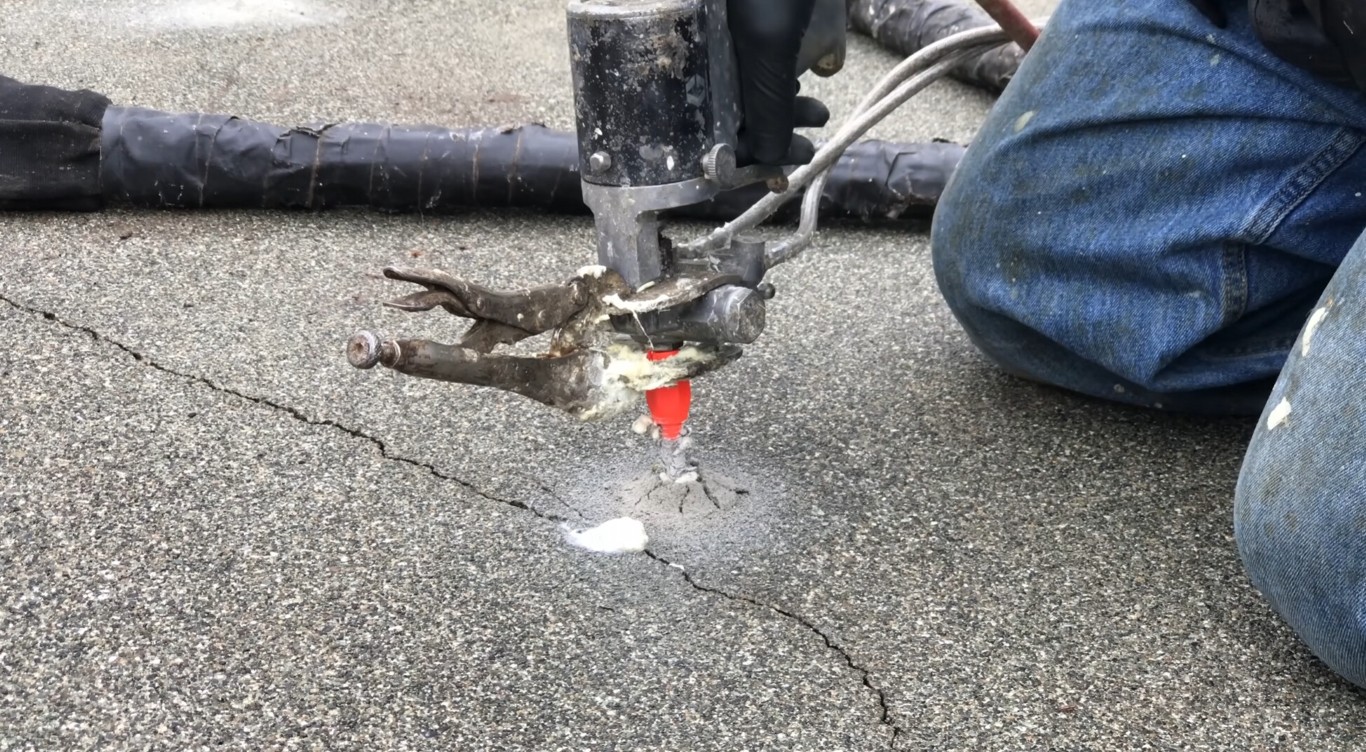
We drill small holes through the concrete, typically 5/8 inch in diameter, at strategic locations. These holes give us access to the void beneath the slab. The placement matters because we need to distribute the lifting force evenly to avoid cracking the concrete. Experienced crews know where to drill based on the slab size and the extent of settlement.
Injecting Polyurethane Foam
We insert injection ports into the drilled holes and pump polyurethane foam beneath the slab. The foam is a two-part mixture that reacts and expands when combined. As it expands, it fills the void and exerts upward pressure on the concrete. We monitor the lifting in real time and stop when the slab reaches the correct height. The foam cures in about 15 minutes, creating a stable, permanent base.
Polyurethane foam weighs almost nothing compared to traditional mud or grout, which reduces the load on already compromised soil. It also resists water absorption and will not wash out over time. After the foam cures, we patch the injection holes with concrete to match the surrounding surface.
Leveling vs. Replacement
When concrete sinks, you have two options: level it or replace it. Each has its place, but leveling makes more sense in most situations.
Concrete Leveling
- Costs 50 to 70 percent less than replacement
- Completes in a few hours
- Minimal disruption to landscaping
- Walk on surface same day
- No demolition or disposal costs
Concrete Replacement
- Higher cost due to demolition and materials
- Takes several days to complete
- Damages surrounding landscape
- Wait 7 days before driving on it
- Disposal fees for old concrete
Replacement makes sense when the concrete is cracked, deteriorated, or beyond repair. But if the slab is in good shape and just needs lifting, leveling is the smart choice. You save money and get your space back faster. We evaluate each situation honestly and recommend what actually makes sense for your property.