
Sidewalks, Walkways & Flatwork
Safe, attractive pathways that connect your property and enhance curb appeal.
Why Quality Flatwork Matters
Flatwork is the concrete industry term for horizontal surfaces like sidewalks, walkways, and pathways. These surfaces might look simple, but they serve critical functions on your property. They provide safe walking routes, protect landscaping from foot traffic, improve accessibility, and contribute significantly to your home curb appeal.
Poorly installed flatwork creates problems quickly. Uneven surfaces become trip hazards, especially for children and elderly visitors. Water pooling on sidewalks leads to slippery conditions and ice formation in winter. Cracking and settling make properties look neglected and can affect property values. Good flatwork prevents these issues through proper planning and execution.
In Thousand Oaks, we see various flatwork needs. Front walkways from the street to your door get heavy use and need to handle constant traffic. Side yard paths connect different areas of your property. Garden walkways wind through landscaping and need to complement the natural setting. Each application requires appropriate design, thickness, and finishing to perform correctly.
We also handle public sidewalk replacement when municipalities require property owners to maintain the sidewalk in front of their homes. These projects must meet specific code requirements for width, slope, and accessibility. We handle all permit requirements and ensure your new sidewalk passes inspection.
Design Considerations for Walkways
Creating effective walkways involves more than pouring concrete in a straight line. Here are the factors we consider when designing your flatwork project.
Width and Path Layout
Main walkways to your front door should be at least 4 feet wide to allow two people to walk side by side comfortably. Side paths can be narrower, around 3 feet. We also consider how the path flows through your property. Gentle curves often look more natural than straight lines, especially in landscaped areas. However, people naturally walk the shortest route, so we design paths that match actual traffic patterns instead of forcing awkward angles.
Slope and Drainage
Walkways need enough slope to drain water but not so much that they feel steep or become slippery. We typically use a 2 percent slope, which means the path drops 1/4 inch per foot of length. This sheds water effectively while remaining comfortable to walk on. In areas with significant elevation changes, we may install steps or ramps with proper handrails.
- Texture and finish for slip resistance in wet conditions
- Integration with existing patios and hardscaping
- Adequate lighting considerations for nighttime safety
- Borders and edging to define the walkway and prevent erosion
We can also incorporate decorative elements like exposed aggregate, stamped patterns, or colored concrete to make your walkways more interesting. These upgrades cost more but significantly enhance appearance. Many homeowners match their walkway finish to their existing driveway or patio for a cohesive look across their property.
Installation Process
Installing quality flatwork follows a systematic process that ensures long-lasting results. Here is how we approach sidewalk and walkway projects.
Site Layout and Excavation
We stake out the walkway path and mark any underground utilities. Then we excavate to the proper depth, typically 6 to 8 inches for most residential walkways. This allows room for 4 inches of gravel base plus 4 inches of concrete. We remove all vegetation and organic material from the excavated area because these materials decompose and leave voids under the concrete.
Base Preparation
We install and compact a gravel base layer. This provides drainage and a stable platform for the concrete. Proper compaction is essential. Loose base material settles over time and causes the concrete to crack or sink. We also set the forms that define the walkway edges and control the concrete thickness. These forms must be level and properly aligned to create straight, professional edges.
Pouring and Finishing
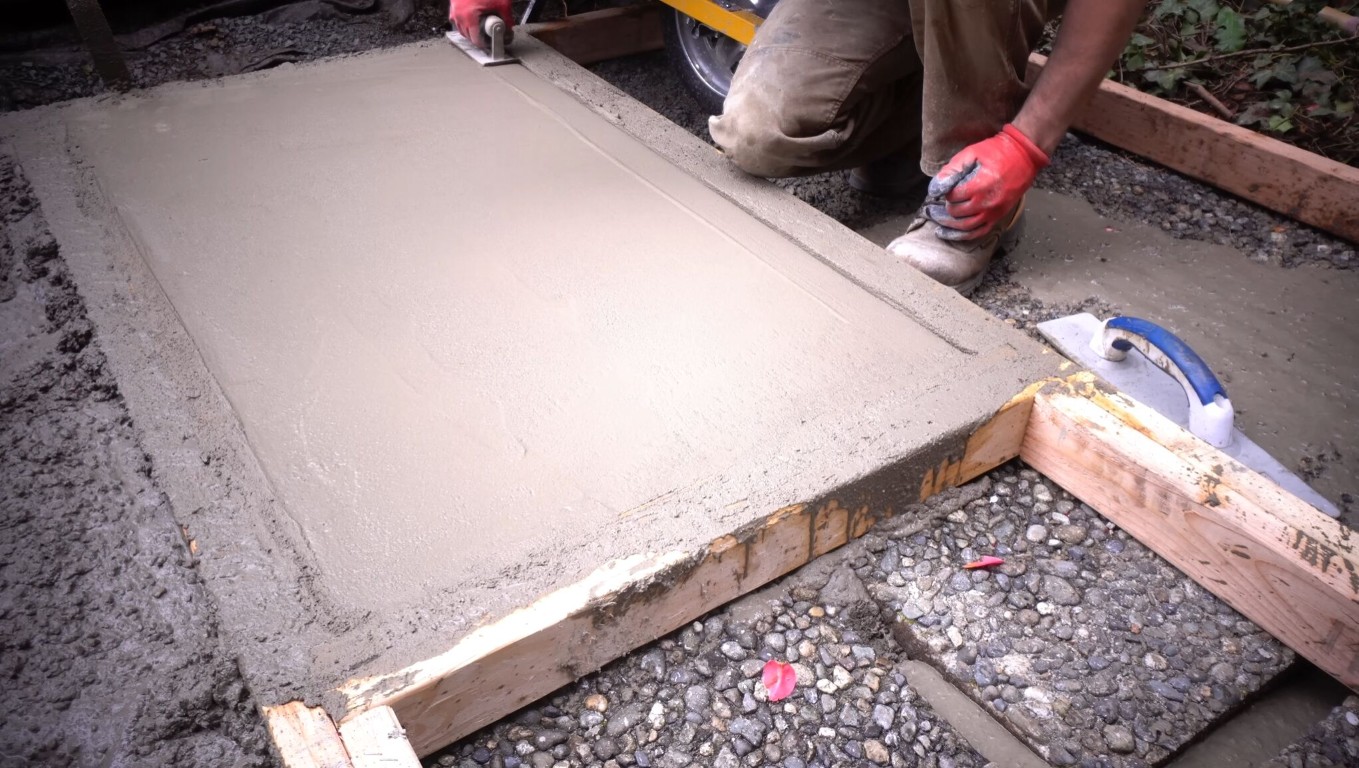
We pour the concrete and work it into place, making sure it fills the forms completely. After screeding the surface level, we use edging tools to create rounded edges that resist chipping. We cut control joints every 4 to 5 feet to control cracking. These joints should align with natural stopping points like steps or where the walkway changes direction. Finally, we apply the surface finish, usually a broom texture for good traction.
Curing and Cleanup
After finishing, we protect the concrete while it cures. This might involve covering it with plastic or applying a curing compound. We keep foot traffic off for at least 24 hours and preferably longer. Once the concrete has cured sufficiently, we remove the forms, backfill along the edges, and clean up the work area. We restore any landscaping that was disturbed during installation.