
Concrete Pool Decks
Beautiful, slip-resistant surfaces that handle water, sun, and constant foot traffic around your pool.
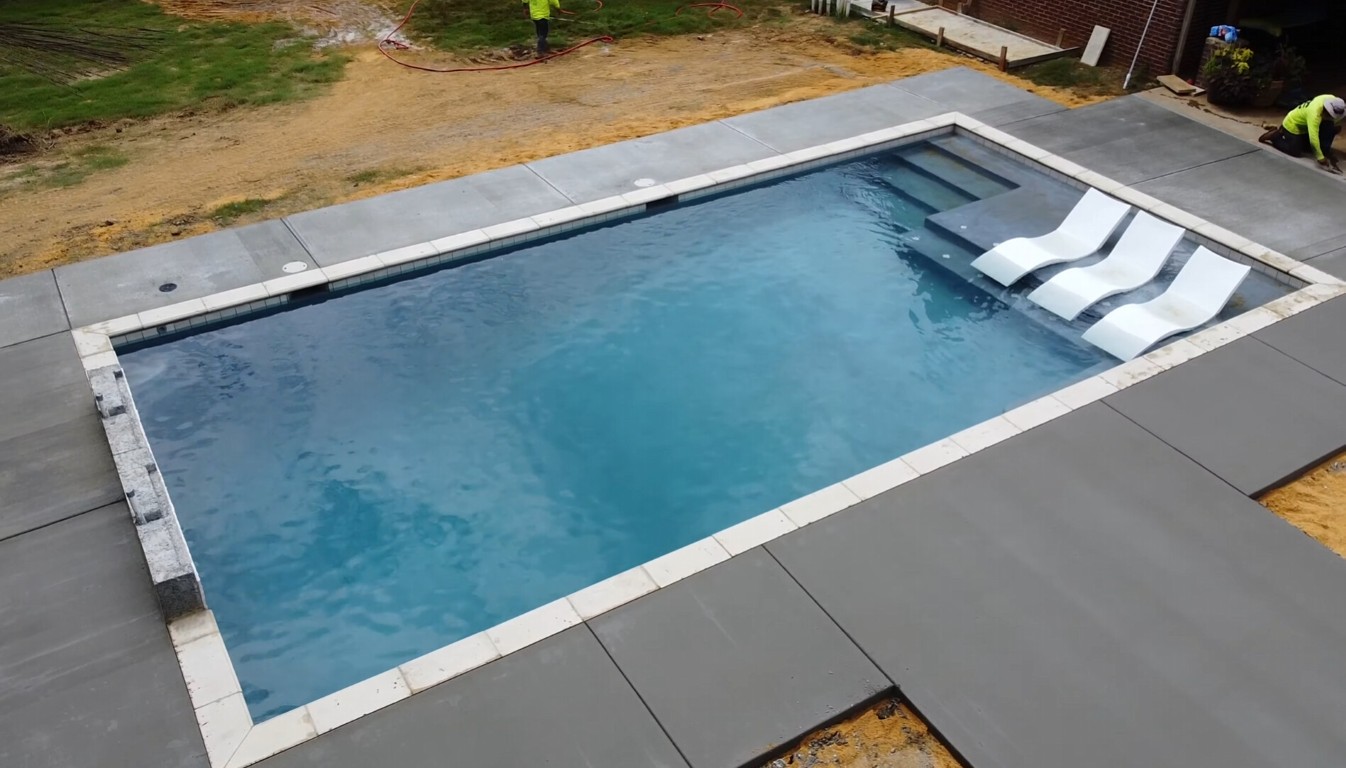
Why Concrete for Pool Decks
Your pool deck takes more abuse than almost any other surface on your property. People walk on it barefoot while dripping wet. Pool chemicals splash onto it. The California sun beats down on it all summer. You need a material that handles all of that while staying safe and looking good.
Concrete pool decks deliver on all fronts. They resist pool chemicals better than wood or composite materials. They do not rot, warp, or splinter. They stay cooler than dark pavers or asphalt when finished with the right texture or coating. And they last decades with minimal upkeep.
Concrete also gives you design flexibility. You can go with a simple broom finish for maximum traction, or choose stamped patterns that mimic natural stone or tile. You can add color to match your home or landscape. The options let you create a pool deck that looks exactly how you want while meeting all the practical requirements of a wet, high-traffic area.
Safety and Slip Resistance
The number one concern for any pool deck is safety. Wet surfaces become slippery, and people running around a pool create a recipe for falls. The right finish makes all the difference.
Textured Finishes
We apply textures that provide grip without being rough enough to scrape bare feet. A broom finish creates subtle ridges that channel water and give traction. Brushed finishes offer a similar effect with a slightly different look. Exposed aggregate reveals small stones in the concrete that create natural texture and visual interest while preventing slips.
Cool Deck Coatings
In Thousand Oaks, summer heat can make concrete uncomfortable to walk on barefoot. Cool-deck coatings reflect more sunlight and dissipate heat, keeping the surface temperature down. These coatings also add texture for slip resistance and come in various colors. You get safety, comfort, and aesthetics in one application.
- Proper slope to drain water away from pool
- Textured surfaces for wet traction
- Control joints to manage cracking
- Sealed surfaces to resist pool chemicals
We design pool decks with safety built in from the start. That means thinking about how water flows, where people walk most, and what finish provides the best combination of traction and comfort.
Design Options for Pool Decks
Concrete pool decks do not have to be plain gray slabs. You have options that let you create a custom look while maintaining the durability and safety concrete provides.
Stamped Concrete
Stamped concrete mimics the look of natural stone, tile, or pavers at a fraction of the cost. We pour the concrete, then press patterns into it before it fully hardens. Popular patterns include flagstone, slate, and tile designs. The texture created by stamping also improves slip resistance, making it a practical choice for pool decks. You can add integral color or acid stains to enhance the natural stone appearance.
Colored Concrete
Color transforms plain concrete into a design element. We can mix color directly into the concrete for uniform tones, or apply acid stains after pouring for variegated, natural-looking results. Earth tones work well around pools because they blend with landscaping and do not show dirt as easily as light colors.
Exposed Aggregate
Exposed aggregate reveals the stones within the concrete mix, creating a textured, non-slip surface with visual depth. Different stone sizes and colors let you customize the look. This finish is popular for pool decks because it combines excellent traction, durability, and a natural aesthetic that complements outdoor spaces.
The Pool Deck Installation Process
Installing a pool deck requires attention to drainage, structural integrity, and finish quality. Here is how we approach every pool deck project.
Site Preparation and Grading
We excavate the area around your pool and create a slight slope away from the pool edge. This ensures water drains properly instead of pooling on the deck or running back toward the pool. We compact the soil and add a gravel base for stability and drainage. Proper grading prevents future settling and water problems.
Reinforcement and Pouring
Pool decks typically need 4 inches of concrete reinforced with steel rebar or wire mesh. The reinforcement prevents cracks from spreading if the ground shifts. We pour the concrete and work quickly to achieve consistent texture throughout. For stamped designs, we apply patterns while the concrete is still workable. Timing matters because concrete starts setting within a couple hours.
Finishing and Curing
We apply the chosen finish, whether that is a broom texture, stamp pattern, or exposed aggregate. We cut control joints to manage cracking in predictable locations. Then we cover the concrete and keep it moist for several days. Proper curing is critical for strength and durability. We recommend waiting at least 7 days before heavy use, though you can walk on it sooner.