
Concrete Steps & Stairs
Safe, durable steps that connect different levels of your property with confidence.
Why Concrete Steps Matter
Steps and stairs are among the most used features on your property. You walk on them every day, often carrying things or in a hurry. They need to be safe, stable, and well-designed. Poorly built steps create serious safety hazards. Uneven risers cause trips. Narrow treads feel unstable. Steps without proper handrails put everyone at risk, especially children and elderly family members.
Concrete steps outlast other materials by decades. Wood steps rot and require constant maintenance. Metal steps rust and become slippery when wet. Brick and stone steps settle unevenly over time. Concrete provides a solid, stable surface that handles daily traffic and weather exposure without deteriorating. When properly built, concrete steps need minimal maintenance for 30 years or more.
Building codes set specific requirements for step dimensions because safety depends on consistency. All risers must be the same height. All treads must be the same depth. Variations of even an inch cause people to stumble. We build steps that meet code requirements and feel comfortable to use. Your feet naturally learn the rhythm of consistent steps, making them safer for daily use.
We install concrete steps for front entries, back doors, basement access, pool areas, and landscape transitions. Each location has different requirements for width, handrails, and drainage. Front entry steps make a statement about your home and need to look good while handling constant traffic. Side and back steps may be more utilitarian but still require proper construction for safety and longevity.
Design Standards for Safe Steps
Building safe, comfortable steps requires following established design principles that have been refined over many years. These standards exist because they work.
Riser and Tread Dimensions
Risers should be 6 to 8 inches tall. Treads should be at least 10 to 11 inches deep. The relationship between riser height and tread depth determines how comfortable steps feel. Too steep and they are tiring to climb. Too shallow and you feel like you are shuffling. We use the formula that twice the riser height plus the tread depth should equal 24 to 25 inches. This creates steps that feel natural to most people.
Width and Landing Requirements
Steps should be at least 36 inches wide, preferably 48 inches for main entries where people might pass each other. Longer staircases need landings every 12 feet of vertical rise. These landings provide resting spots and make stairs less intimidating. They also improve safety by breaking falls into shorter sections. At the top and bottom, landings need to be at least 36 inches deep.
- Proper slope on treads for water drainage without pooling
- Handrails required for stairs with more than three risers
- Consistent lighting for safe nighttime use
- Textured finishes for traction in wet or icy conditions
We also consider how steps integrate with your property. Do they align naturally with walkways and paths? Do they direct water away from foundations? Are they positioned to avoid ice buildup in shaded areas? These practical concerns affect daily usability as much as the dimensions do.
Construction Process
Building concrete steps involves more complexity than pouring a flat slab. Each step must be formed separately and the whole structure must be tied together properly.
Site Preparation and Foundation
We start by excavating and preparing a solid foundation. Steps need footings that extend below the frost line just like other structures. We pour a base pad and let it cure before building the steps on top. This prevents the entire staircase from settling or shifting. We also install proper drainage so water does not accumulate under the steps and cause frost heaving in winter.
Forming and Reinforcement
Forming steps requires precision carpentry. We build forms for each individual step, making sure all risers are exactly the same height. Even small variations cause problems. We install rebar throughout the structure to tie everything together and prevent cracking. The reinforcement connects each step to the ones above and below, creating a unified structure that moves as one piece rather than separate steps that can shift independently.
Pouring and Finishing
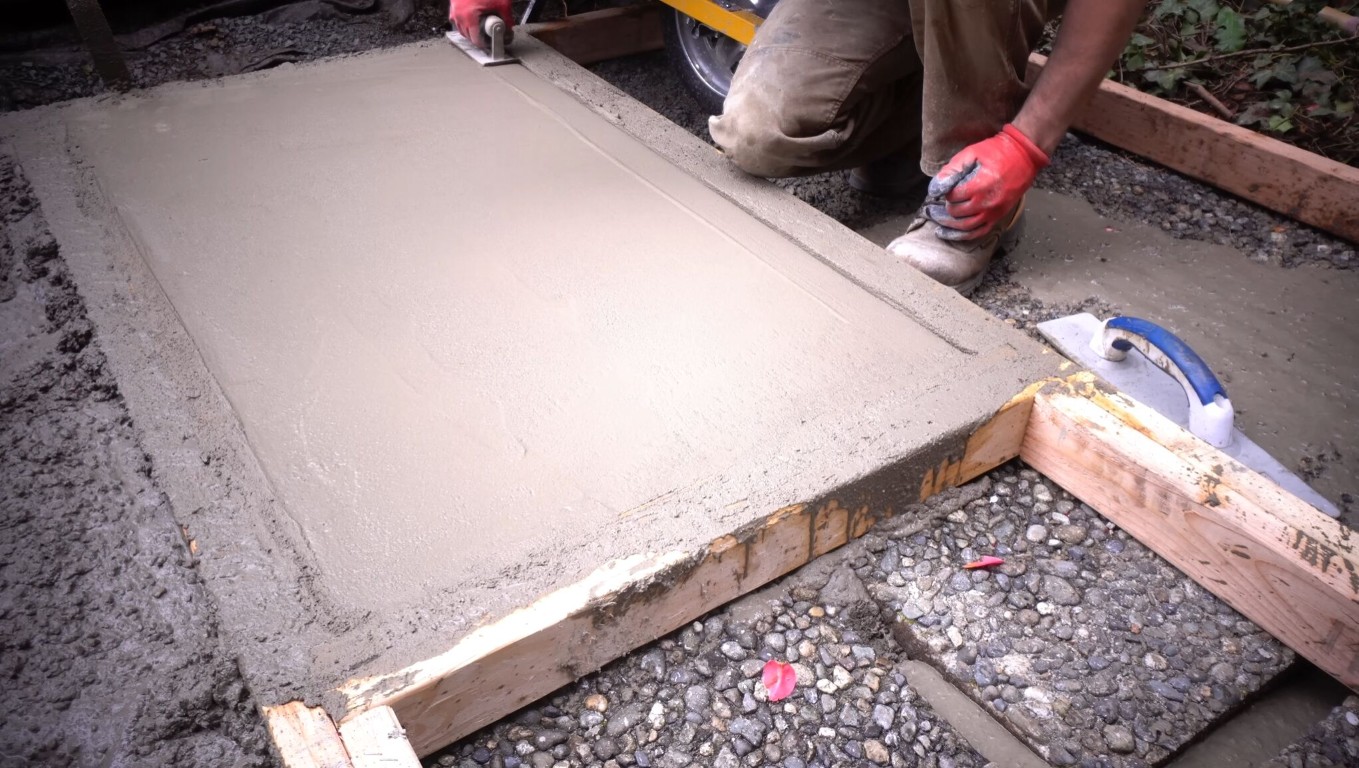
We pour concrete starting from the bottom and working up. This allows the weight of upper steps to help consolidate the concrete below. We work the concrete thoroughly to eliminate air pockets, especially in corners where forms meet. After initial setup, we finish each tread surface, typically with a broom texture for traction. We round the front edge of each step slightly to prevent chipping and make them more comfortable for your feet.
Curing and Handrail Installation
After finishing, we protect the concrete while it cures. We remove forms after 24 to 48 hours but do not allow heavy traffic for at least a week. If your steps require handrails, we install mounting sleeves in the concrete while it is still wet, or we drill and anchor them after curing. Handrails must be solid and properly anchored because people depend on them for balance and safety, similar to the careful work required for other concrete installations.